Professional Floor Mopping in Palm Beach, FL
Serving Palm Beach, Port St. Lucie, and Fort Pierce
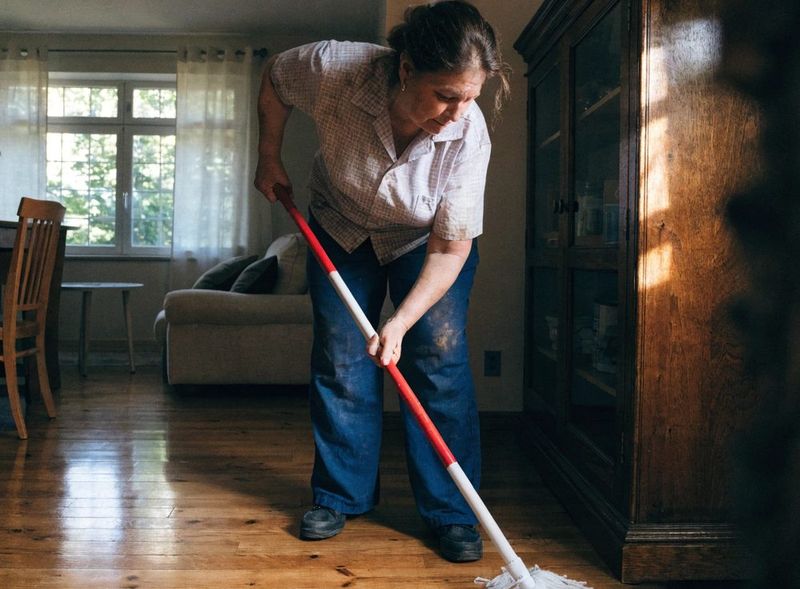
Hard floors swept and mopped with products matched to the surface, whether tile, laminate, vinyl, or sealed wood. Edges and corners included, not just the open middle.
Floor mopping sounds like the simplest job in cleaning and is the one most often done badly. The calls we get are rarely about dirt, they are about the aftermath: a haze on terrazzo that appeared after someone used the wrong product, a dull patch on marble in an entry, streaks across tile that show up as soon as the sun comes across the room. Palm Beach makes that more likely than most places, because the houses here run several different floor materials under one roof and a single bucket of all-purpose cleaner treats them all the same. Proper mopping means knowing what is underfoot in each room and changing the approach at the doorway.
What's Included
- Floors swept or vacuumed first, edges and corners included, before any water goes down
- Product matched to the surface, neutral pH on stone and terrazzo, damp mop on sealed wood
- Edges, corners, and the line along the baseboard mopped, not merely the open middle of the room
- Under and around furniture wherever a piece can be moved and replaced safely
- Grout lines and tile edges worked where grit and old mop residue have built up over time
- Mop water changed as we go, so one dirty pass is not spread through the next room
- Door thresholds, transitions, and the strip under toe kicks cleaned rather than mopped past
- Sticky spots and dried spills lifted by hand first, so they are not smeared across the floor
- Floors left as dry as the material wants, with wood and laminate dried behind the mop
Sweep, Then Mop, and Why the Order Is Not Negotiable
Sand is abrasive, and in this part of Florida it is everywhere. Put a wet mop down on an unswept floor and you are not cleaning, you are dragging grit in circles across a finish, which is how tile grout darkens and how a polished surface loses its shine over a few years. So every floor gets swept or vacuumed first, including the edges and the corners where grit collects and where a broom typically stops short. Only once the loose material is off the floor does any water come out of the bucket.
Then the product changes by room. Neutral pH on marble, terrazzo, and natural stone, because acidic and all-purpose cleaners etch stone slowly and permanently. A well-wrung mop on sealed hardwood, with the seams kept dry. Tile can take more water, but it also holds residue, which is what makes a floor sticky and dull after months of cheap cleaner. The other half is the water itself. Once mop water is dirty it becomes a delivery system, so we change it between rooms rather than at the end.
Why This Matters in Palm Beach
Palm Beach floors are rarely all one material. A single house can run marble in the entry, terrazzo through a mid-century wing, hardwood in the bedrooms, and tile out toward the patio, and each of those wants a different product and a different amount of water. All-purpose cleaner dulls marble over time by etching the polished surface a fraction at a time, and the damage does not show until it is widespread. Too much water swells the seams in wood and lifts the edges of laminate planks. Terrazzo shows every streak under a bright window, which the older homes here have plenty of. Then there is grit. Sand rides in on shoes from the beach, from the driveway, and from the yard, and settles along the edges of a room and at the doorways rather than in the middle, so a mop that only covers the open floor never touches most of it. If that sand is not swept out first, mopping just grinds it across whatever finish is underneath. Sweeping properly and switching products room by room is most of the job.
Judging a Mopping Job After the Floor Dries
Wait until the floor is fully dry before you assess it, because almost anything looks good wet. Then look across the surface with light coming from a low angle rather than straight down. Streaks, mop swirl, and residue all show in raking light and disappear under overhead light. Walk barefoot through the room as well, since any tack underfoot means product was left behind rather than rinsed off or wrung out properly.
The second thing to check is the perimeter. Run a finger along the baseboard line and into the corners, and look at the thresholds between rooms. Those are the places a fast job leaves untouched, and they are the places grit gathers first. A floor cleaned only across the open middle will look fine on the day, then start showing a dark outline around the edge of every room within a couple of weeks.
Frequently Asked Questions
Floors take the most traffic and get the least considered treatment, and the wrong product on the wrong surface is expensive to undo. If your Palm Beach home runs stone in one room and wood in the next, we will match the method to each and sweep before anything gets wet. Tell us what is underfoot and we will quote it upfront. We are here when you want it booked.
Where We Clean
Palm Beach, Port St. Lucie and Fort Pierce, plus the communities around them. Pick your city for local details and pricing.